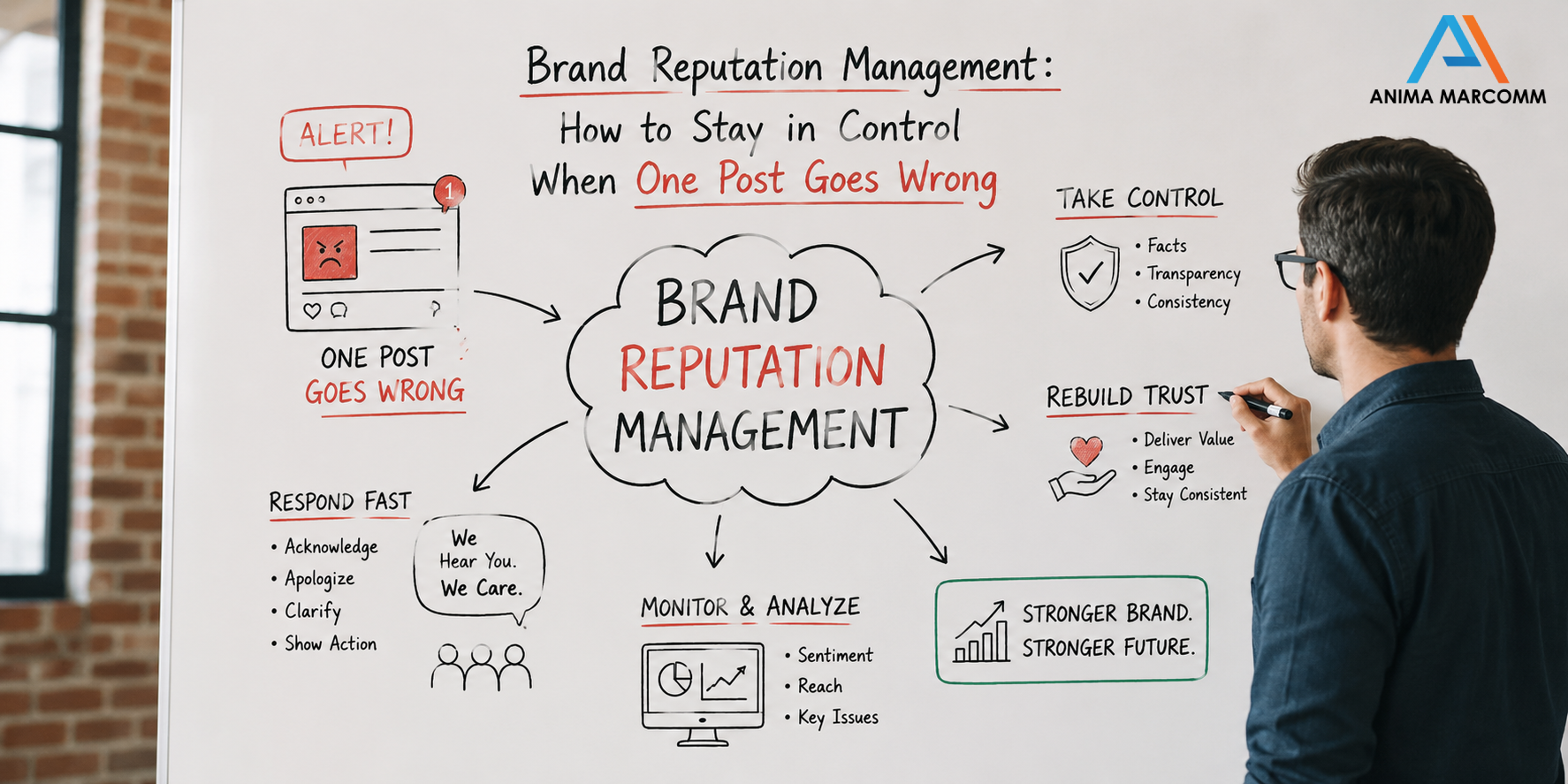
A brand takes years to build their brand reputation. One post can flip that overnight. Maybe you said it. Maybe someone said it about you. Either way, your inbox is suddenly full, your comments section has turned into a fight, and people who never heard of your business yesterday think they have figured you out today.
This is not rare. It happens to brands every single week. And if your business runs on trust, which every business does, you need a plan for the day it happens to you.
Brand reputation management is not about controlling what strangers say. You cannot do that. It is about controlling how you respond, how quickly you act, and whether you did any work before the storm hit.
Screenshots Outlive the Outrage
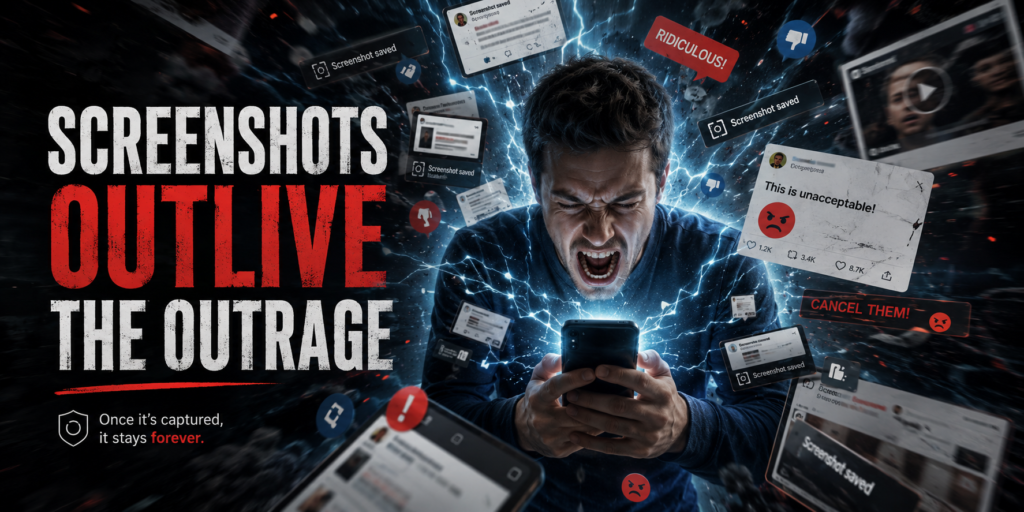
Most business owners assume people will forget. And they do, sort of. Social media moves fast. The mob picks a new target by Thursday.
But the damage does not move with the trend. Someone Googles your brand six months later. The screenshot is right there. The thread is still searchable. A blog post about that one bad day is now sitting on page one. That moment becomes the first impression for every new customer who looks you up.
The real cost of a viral post brand crisis is rarely the noise on day one. It is the quiet stuff that follows:
- Customers stop ordering and never tell you why
- Partnership conversations go cold without notice
- The candidates you wanted choose your competitor instead
That is the part nobody warns you about. The visible storm passes. The invisible damage stays for years.
Why Most Brands Panic, and Why That Backfires
The urge is to react. Do something. Say something. Most brands fall into one of four traps:
- Deleting the post. Thousands have already seen it. Deleting now reads as cover-up.
- Firing off a defensive statement. This signals you care more about being right than about the people you upset.
- Going silent. Silence hands the microphone to your worst critics. They will use it.
- Blaming someone else. Almost never lands. Now you look dishonest on top of whatever started the mess.
Why does this keep happening? Most brands have no crisis response plan. They never thought through what they would do if their worst post blew up. So they make their biggest decisions in their worst possible state of mind. Panic and judgment do not mix.
Your Online Reputation Is Built Before You Need It
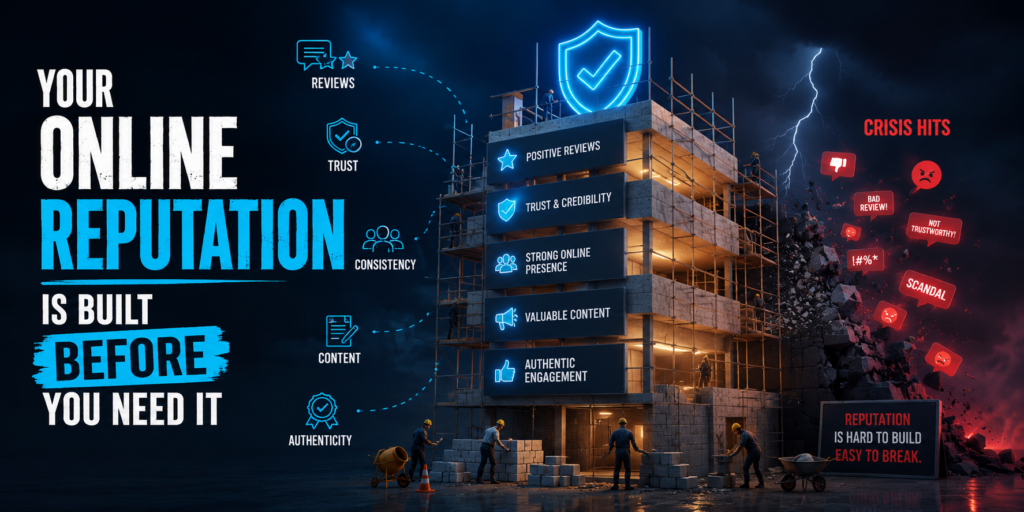
If your brand has not had a public meltdown yet, that is a gift. You still have time. Use it. Brand reputation management is not a fire extinguisher you grab in an emergency. It is the sprinkler system you install years before any fire.
Two things to lock in now.
Know What You Stand For. And What You Will Not.
This sounds basic. Most businesses cannot do it when it actually matters. Not the values printed and framed on the office wall. The real ones. The ones that quietly decide what you do when there is no clean answer.
When you actually know what your brand stands for, social media crisis response gets a lot less complicated. You already know:
- What your brand would do in this situation
- What your brand would never do
- What kind of response sounds like you, not like a press release
You do not need an agency to write your apology. That clarity is your first line of defence.
Build the Playbook Before You Need It
Sit down with your team. Or by yourself, if you are running this alone. Walk through real scenarios out loud:
- A customer posts a misleading review and it picks up speed
- An employee says something publicly that contradicts your values
- A competitor goes after you, openly or quietly
For each one, lock in three things:
- Who replies
- What the tone sounds like
- How fast you respond
You do not need a 40-page brand crisis management manual. You need a one-page plan you can actually find and follow on the worst day of your year.
When It Hits: What to Actually Do
The post is climbing. The comments are piling up. Your phone will not stop. Here is the move.
Pause Before You Post Anything
The worst brand responses are written in the first hour. That is when emotions are running the room. Before anything goes public, slow down.
- Read the full conversation, not just the screenshot being shared
- Get the actual context of what happened
- Talk to anyone on your team who was in the room
- Draft your response. Then wait before publishing it.
A pause of even two hours will not cost you. A rushed, emotional statement you have to walk back tomorrow? That will cost you for months. People can wait for a thoughtful reply. They cannot unsee a careless one.
Own It or Clarify It. Do Not Disappear.
If your brand actually got it wrong, own it. Not with a copy-paste apology that reads like it was approved by lawyers. Own it like a real person would.
A good response does three things:
- Says what happened, clearly
- Explains why it happened, honestly
- States what you are doing about it, with specifics, not vague promises
If you got misrepresented or taken out of context, clarify it. But not with attitude. The moment you sound combative, the audience checks out. They did not show up to watch a fight. They showed up to decide if your brand is worth trusting.
And whatever you do, do not vanish. Going dark during a crisis tells everyone watching: we do not care enough to face this. Even a short, honest acknowledgment buys you time and shows you are paying attention.
After the Storm: Rebuild Without Pretending Nothing Happened
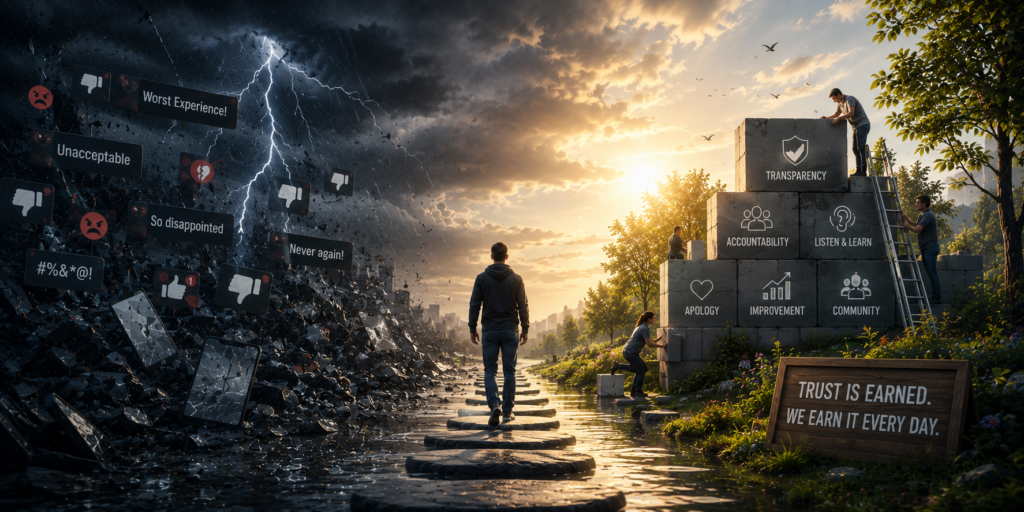
When the noise dies down, the temptation is to act like it never happened. Just resume normal content. Smile and post.
Bad call. Your audience watched how you handled it. Some left. Some stayed because they respected the response. The ones who stayed are watching closer now. They want to see if your actions match the words.
Real rebuilding looks like this:
- If you said you would change something, actually change it
- If you promised to investigate, share what you found
- If you committed to better practices, let people see those practices working
- Show consistency over months, not one good apology
This is where strong brands separate from weak ones. Weak brands treat a viral crisis as a PR problem to manage. Strong brands treat it as honest feedback about what to fix.
Your Online Reputation Is a Living Thing. Treat It That Way.
Brand reputation management is not a project you finish. It is something you keep doing, every week, not only when something is on fire.
In practice that looks like:
- Tracking what people say about your brand across platforms
- Setting up alerts for your brand name on Google and the major networks
- Paying attention to how customers feel, not just what they buy
- Showing up for your community when things are quiet, not only during a crisis
- Asking yourself, before every post: if this got screenshotted and shared tomorrow, would I stand behind it?
The brands that survive viral moments are the ones who already built real relationships with their audience. Those relationships act as a cushion. People extend grace to brands they already trust. If you have not built that trust yet, start this week.
Be intentional about what you put out. Every post, every reply, every story is part of your brand’s permanent record. You do not need to be paranoid. You do need to be deliberate. If the answer to that question is no, do not hit publish.
The Real Power Move Is Preparation, Not Perfection
You cannot prevent every viral disaster. You cannot control how strangers react to something you said or did. What you can control is whether you are ready for it.
Build a brand that actually stands for something. Have a brand crisis management plan ready before you need it. And when things break, because at some point they will, respond with clarity, accountability, and speed.
That is how you stay in control. Not by dodging the storm. By knowing exactly what to do when it lands.