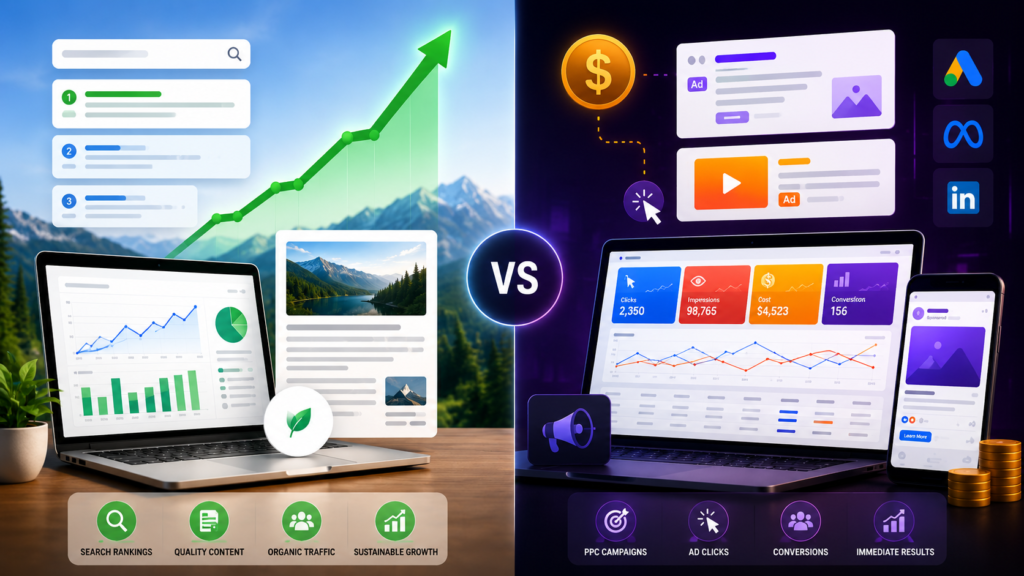
In today’s competitive digital landscape, brands are constantly searching for the most effective ways to increase visibility, attract customers, and drive conversions. Among the most debated topics in digital marketing is SEO vs Paid Ads. Businesses often struggle to decide whether they should invest in long-term organic growth through SEO or focus on immediate results through paid advertising.
The truth is that both strategies play important roles in digital marketing. However, choosing the right approach depends on factors such as business goals, budget, competition, timeline, and target audience.
Understanding the differences between SEO and Paid ads helps brands make smarter marketing decisions and create balanced strategies that deliver sustainable growth.
This blog explores the advantages, challenges, and strategic applications of SEO and paid advertising, helping brands determine what they should choose in today’s digital environment.
Understanding SEO and Paid Ads
Before deciding which strategy works best, it is important to understand the difference between SEO and paid ads.
What is SEO?
SEO (Search Engine Optimisation) is the process of optimising a website and its content to improve visibility in organic search engine results.
SEO strategies include:
- Keyword optimization
- Content marketing
- Technical SEO
- Link building
- User experience optimization
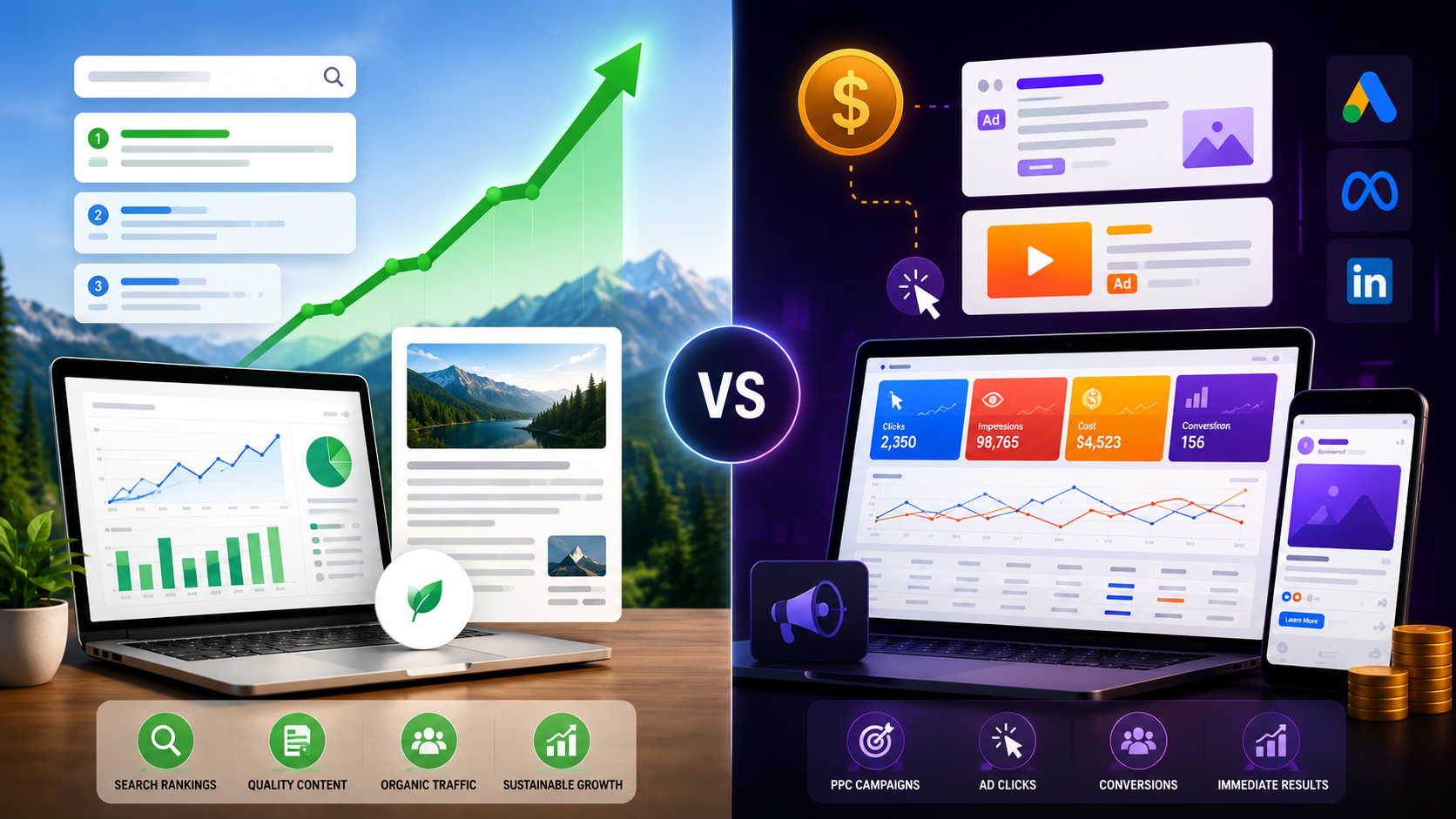
The goal of SEO is to increase organic traffic and improve long-term visibility.
What are Paid Ads?
Paid ads refer to digital advertisements where brands pay platforms to display their content to targeted audiences.
Examples include:
- Google Search Ads
- Display Ads
- Social Media Ads
- Video Ads
- Shopping Ads
Paid advertising focuses on immediate visibility and targeted audience reach.
Why the Debate Around SEO vs Paid Ads Matters
The discussion around SEO vs Paid Ads matters because businesses often operate with limited budgets and resources.
Brands want to know:
- Which strategy delivers faster results?
- Which offers better ROI?
- Which is more sustainable?
- Which improves long-term brand authority?
The answer depends on the brand’s objectives and market conditions.
Advantages of SEO in SEO vs Paid Ads
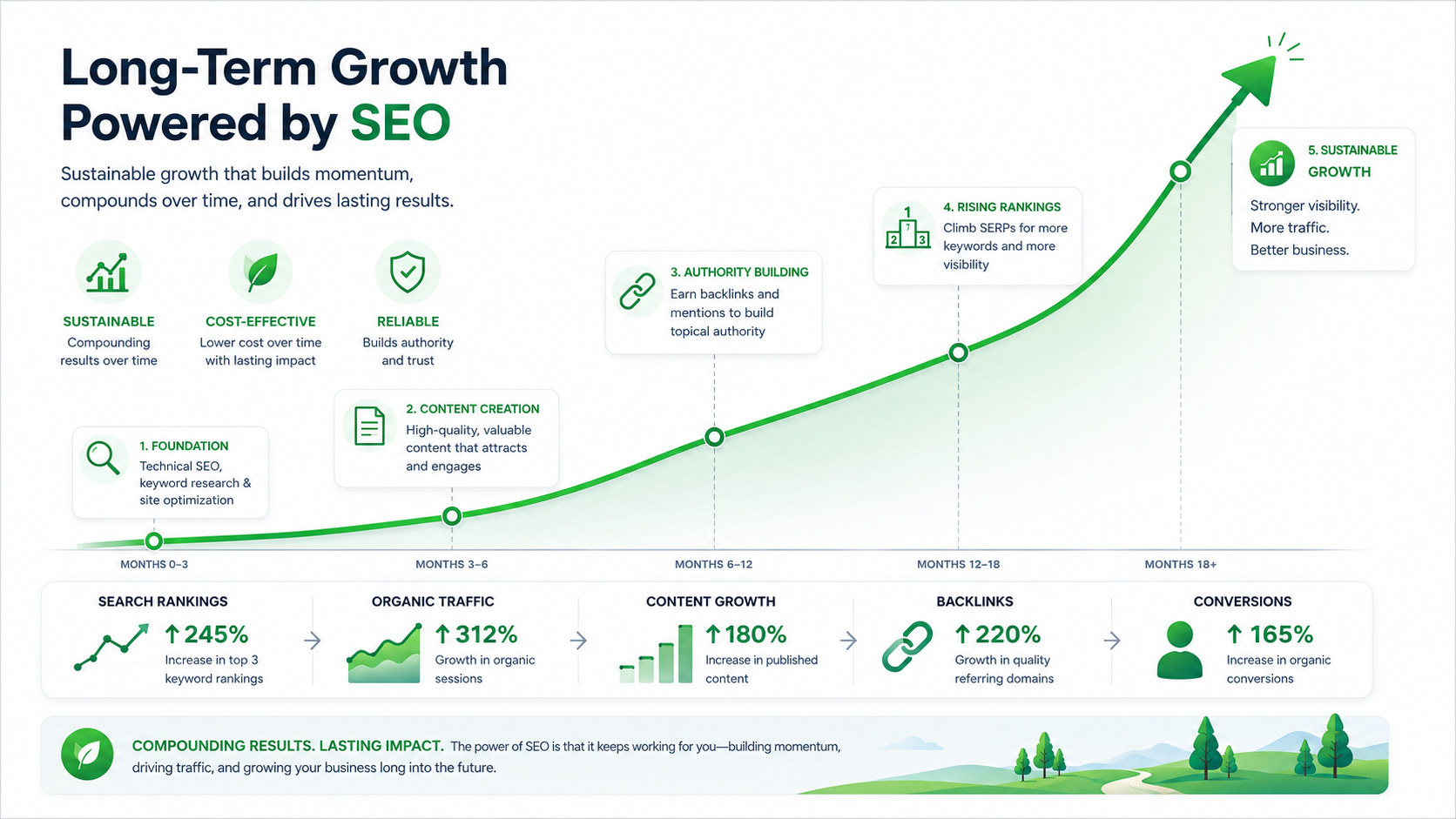
SEO remains one of the most valuable long-term digital marketing strategies.
1. Long-Term Organic Visibility
One of the biggest advantages of SEO is sustainability. High-ranking content can continue generating traffic for months or even years.
Unlike paid ads, SEO traffic does not disappear immediately when spending stops.
2. Builds Brand Authority and Trust
Users often trust organic search results more than advertisements.
Ranking organically:
- Improves credibility
- Strengthens brand authority
- Builds audience trust
This makes SEO a critical factor in the SEO vs Paid Ads discussion.
3. Cost-Effective Over Time
While SEO requires investment in content and optimisation, it often delivers lower long-term customer acquisition costs compared to paid advertising.
4. Supports Content Marketing
SEO encourages brands to create valuable, educational, and relevant content.
This helps businesses:
- Build thought leadership
- Improve engagement
- Increase organic discoverability
5. Better User Experience
SEO also focuses on:
- Website speed
- Mobile optimization
- Navigation
- User-friendly experiences
Improved user experience benefits both rankings and conversions.
Challenges of SEO in SEO vs Paid Ads
Despite its benefits, SEO has limitations.
1. Slow Results
SEO takes time. Ranking improvements may require several months.
2. Algorithm Changes
Search engine algorithms evolve frequently, affecting rankings.
3. High Competition
Competitive industries require strong SEO strategies and consistent optimisation.
4. Continuous Effort Required
SEO is not a one-time task; it requires ongoing updates and monitoring.
Advantages of Paid Ads in SEO vs Paid Ads
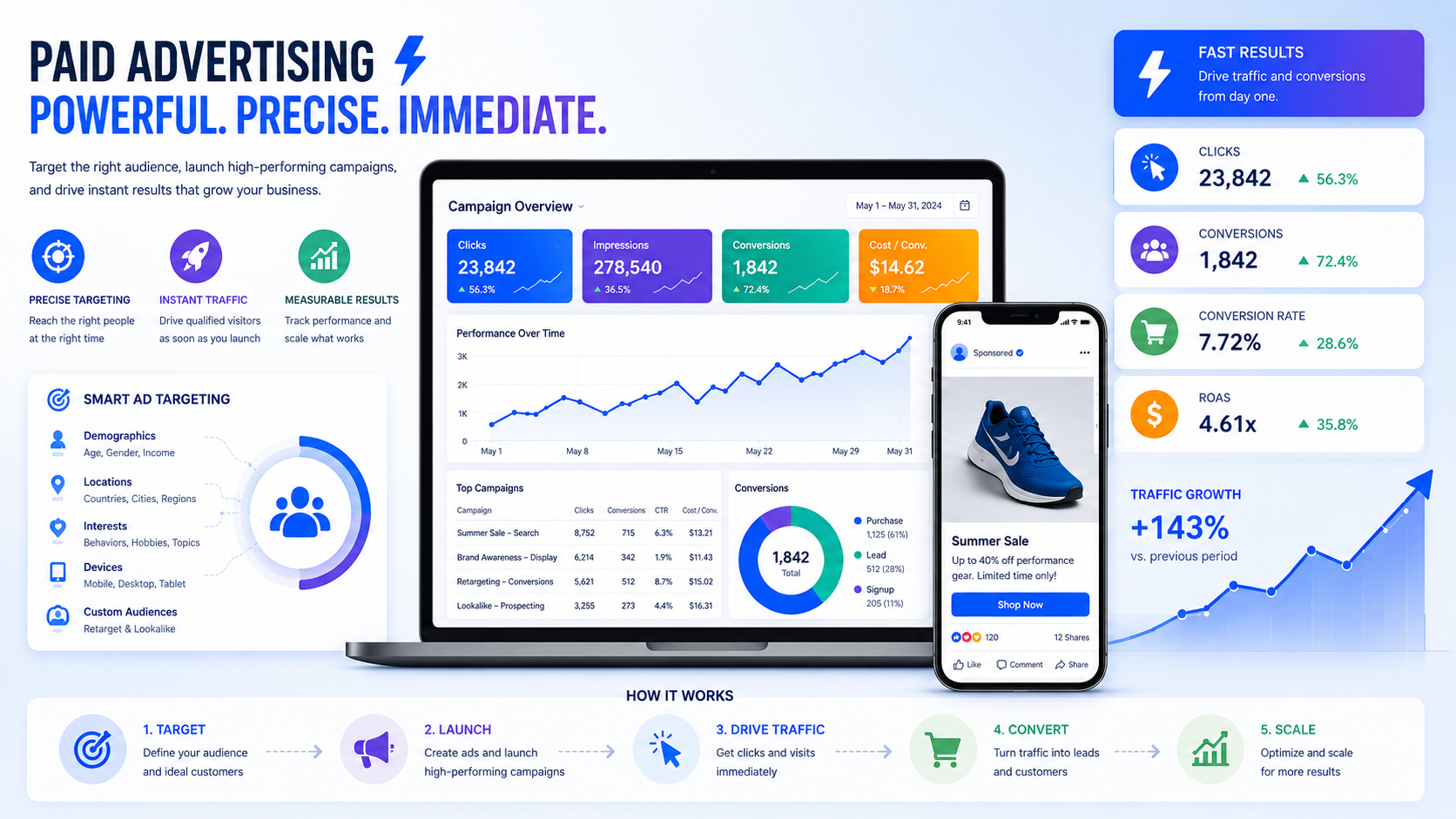
Paid advertising offers several advantages, especially for businesses seeking quick results.
1. Immediate Visibility
Paid ads can place brands at the top of search results instantly.
This is especially useful for:
- Product launches
- Seasonal campaigns
- Limited-time offers
2. Precise Audience Targeting
Paid advertising platforms allow brands to target audiences based on:
- Demographics
- Interests
- Behaviour
- Location
This improves campaign efficiency and relevance.
3. Faster Traffic and Conversions
Unlike SEO, paid ads generate traffic immediately after launch.
This makes paid advertising effective for:
- Lead generation
- E-commerce sales
- Quick campaign goals
4. Measurable Performance
Paid advertising platforms provide detailed analytics, allowing brands to track:
- Click-through rates
- Conversions
- Cost per click
- Return on ad spend
5. Scalability
Brands can scale campaigns quickly by increasing budgets or expanding audience targeting.
Challenges of Paid Ads in SEO vs Paid Ads
While paid ads offer speed, they also come with challenges.
1. Ongoing Costs
Traffic stops when ad spending stops.
2. Ad Fatigue
Audiences may ignore repetitive ads over time.
3. Increasing Competition
Higher competition often increases advertising costs.
4. Lower Trust Compared to Organic Results
Some users prefer organic results and may avoid clicking advertisements.
SEO vs Paid Ads: Which Delivers Better ROI?
ROI depends on business goals and timelines.
SEO ROI
SEO typically provides:
- Long-term value
- Sustainable traffic
- Lower acquisition costs over time
However, results take longer to achieve.
Paid Ads ROI
Paid ads provide:
- Faster conversions
- Immediate traffic
- Short-term campaign success
But costs can increase significantly over time.
In the SEO vs Paid Ads debate, ROI should be evaluated based on:
- Campaign objectives
- Industry competition
- Customer lifetime value
When Brands Should Choose SEO
SEO is ideal when brands want:
- Long-term organic growth
- Strong online authority
- Sustainable traffic
- Thought leadership positioning
Industries that benefit heavily from SEO include:
- Education
- Healthcare
- SaaS
- B2B services
- Publishing
When Brands Should Choose Paid Ads
Paid ads are ideal for:
- Immediate visibility
- Product launches
- Time-sensitive promotions
- Fast lead generation
Industries with high transactional intent often benefit from paid advertising.
SEO vs Paid Ads for Startups
Startups often face budget constraints.
SEO Benefits for Startups
- Builds long-term visibility
- Improves brand trust
- Reduces future acquisition costs
Paid Ads Benefits for Startups
- Generates quick awareness
- Helps test audiences and messaging
- Supports rapid growth campaigns
A balanced approach is often the best solution.
The Best Strategy: Combining SEO and Paid Ads
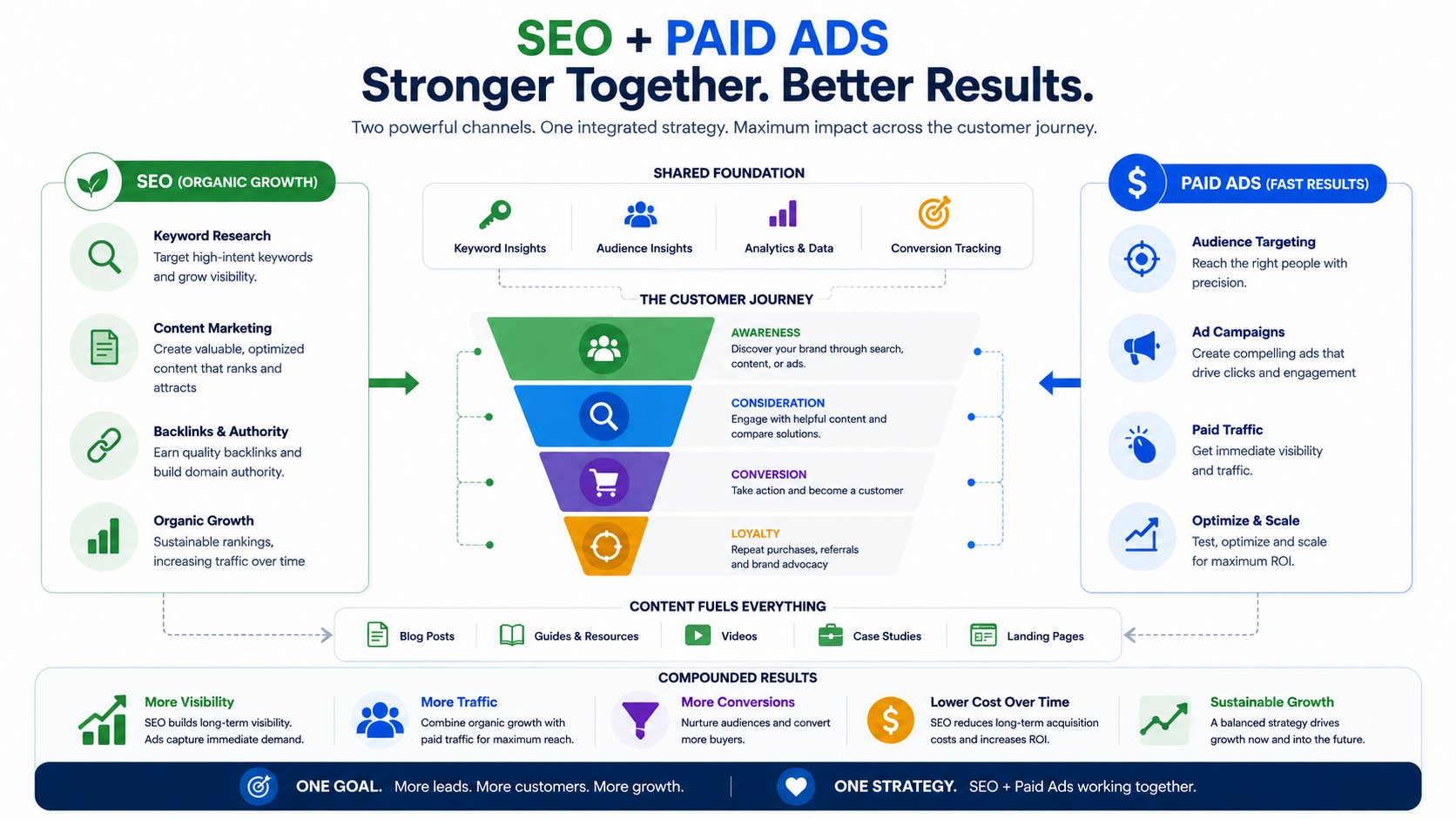
The debate should not always be SEO vs Paid Ads; sometimes the answer is both.
How SEO and Paid Ads Work Together
- Paid ads generate immediate traffic
- SEO builds long-term authority
- Paid campaigns can test keywords for SEO strategies
- SEO content improves ad quality scores
Integrated strategies create stronger marketing ecosystems.
Role of Content Marketing in SEO vs Paid Ads
Content marketing supports both SEO and paid campaigns.
For SEO
Content improves:
- Organic rankings
- Engagement
- Authority
For Paid Ads
Content improves:
- Landing page relevance
- Ad performance
- Conversion rates
Strong content strengthens both strategies.
How AI is Influencing SEO vs Paid Ads
AI is reshaping digital marketing rapidly.
SEO and AI
AI helps with:
- Keyword research
- Content optimization
- Search intent analysis
Paid Ads and AI
AI improves:
- Audience targeting
- Automated bidding
- Performance optimization
Brands must adapt to AI-driven marketing strategies to remain competitive.
SEO vs Paid Ads in the Future of Digital Marketing
The future of digital marketing will likely focus on:
- Personalised search experiences
- AI-powered advertising
- Voice search optimization
- Privacy-focused targeting
Brands that combine SEO and paid advertising strategically will gain stronger competitive advantages.
Common Mistakes Brands Make in SEO vs Paid Ads
Relying Only on Paid Ads
This can lead to unsustainable marketing costs.
Ignoring SEO
Without SEO, brands lose long-term visibility opportunities.
Poor Content Strategy
Weak content reduces both SEO and ad effectiveness.
Lack of Data Analysis
Without analytics, brands cannot optimise performance.
How Brands Should Decide Between SEO vs Paid Ads
To choose effectively, brands should evaluate:
- Budget availability
- Growth timeline
- Industry competition
- Audience behaviour
- Long-term business goals
A strategic mix often delivers the best results.
Conclusion
SEO vs Paid Ads – What Should Brands Choose?
The debate around SEO vs Paid Ads is not about choosing one and rejecting the other. Both strategies serve different purposes and offer unique advantages.
SEO provides:
- Long-term visibility
- Brand authority
- Sustainable growth
Paid ads provide:
- Immediate traffic
- Fast conversions
- Precise targeting
The most successful brands understand how to balance both strategies effectively.
In today’s digital world, the smartest approach is not simply SEO or paid ads—it is building an integrated marketing strategy that combines short-term performance with long-term brand growth.