
Public Relations has evolved far beyond press releases and media mentions. In today’s hyper-connected, content-saturated world, brands are no longer competing only for visibility; they are competing for attention, trust, and emotional connection. This shift has fundamentally changed how PR works.
At the centre of this evolution lies one powerful approach: emotional storytelling in PR.
In an era where audiences scroll past ads in seconds and distrust overt brand messaging, emotional storytelling has emerged as one of the most effective tools in modern PR. It humanises brands, builds credibility, and creates lasting impressions that facts and features alone cannot achieve.
This blog explores why emotional storytelling works in modern PR, how it influences perception and behaviour, and how brands can use it strategically to build trust, relevance, and long-term reputation.
The Evolution of Public Relations: From Information to Emotion

Traditional PR focused on distributing information: announcements, achievements, launches, and milestones. While information is still important, it is no longer sufficient.
Today’s audiences are:
- Overloaded with content
- Highly sceptical of promotional messaging
- Emotionally driven in decision-making
- More likely to trust stories than statements
As a result, emotional storytelling in PR has become essential. Modern PR is not just about what a brand says, but how it makes people feel.
Stories that evoke empathy, pride, hope, or inspiration cut through noise and create deeper engagement. This emotional layer is what transforms PR from a communication function into a reputation-building strategy.
Why Emotional Storytelling in Public Relations Resonates with Modern Audiences

Human beings are wired for stories. Neuroscience shows that stories activate multiple areas of the brain, making information easier to remember and more impactful.
Key Reasons Emotional Storytelling Works in Public Relations
- Emotions drive attention – People pay attention to stories that make them feel something
- Stories are memorable – Emotional narratives are retained longer than facts
- Emotion builds trust – Audiences trust brands that feel human and relatable
- Stories inspire action – Emotion influences decisions more than logic
In modern PR, where credibility and perception matter more than reach, emotional storytelling creates meaningful connections that last.
Emotional Storytelling in Public Relations vs Traditional Brand Messaging
Traditional brand messaging focuses on:
- Product features
- Company achievements
- Sales-driven narratives
- Controlled brand language
Emotional storytelling in Public Relations focuses on:
- Human experiences
- Real people and real challenges
- Values and purpose
- Authentic, relatable narratives
This shift is critical because audiences don’t connect with companies; they connect with people, values, and shared experiences.
The Role of Trust in Emotional Storytelling in Public Relations
Trust is the foundation of effective PR. Without trust, even the most visible brand struggles to influence perception.
How Emotional Storytelling Builds Trust
- Shows vulnerability instead of perfection
- Highlights honesty over hype
- Demonstrates empathy and understanding
- Aligns brand actions with real-world impact
When brands share stories rooted in truth and emotion, they appear more credible and transparent. This is why emotional storytelling in PR is especially powerful during times of change, crisis, or transformation.
Why Emotional Storytelling in Public Relations Works Better in the Digital Age
The digital age has amplified both opportunity and scrutiny. Every brand message can be questioned, shared, or criticised instantly.
In this environment:
- Audiences value authenticity
- Performative messaging is quickly rejected
- Brands are expected to stand for something
Emotional storytelling allows brands to communicate purpose instead of promotion. It gives context to decisions, explains intentions, and invites audiences into the brand’s journey rather than talking at them.
The Psychology Behind Emotional Storytelling in Public Relations
Emotion plays a major role in how people process information and make decisions.
Psychological Factors That Make Emotional Storytelling Effective
- Empathy – People connect with stories in which they see themselves
- Mirror neurons – Stories allow audiences to emotionally experience situations
- Social identity – People align with brands that reflect their values
- Cognitive ease – Stories simplify complex ideas
By leveraging these principles, emotional storytelling in PR helps brands communicate complex messages, such as innovation, sustainability, or transformation, in a way that feels accessible and human.
Emotional Storytelling in Public Relations and Media Relations
Journalists are storytellers at heart. They don’t just report facts; they look for narratives that resonate with readers.
PR pitches that rely purely on statistics or announcements often fail to capture attention. On the other hand, emotionally grounded stories:
- Are more newsworthy
- Provide human angles
- Offer social relevance
- Align with editorial priorities
This makes emotional storytelling in PR more effective for securing earned media coverage and building long-term media relationships.
How Emotional Storytelling Shapes Brand Reputation
Reputation is built over time through consistent perception. Emotional storytelling plays a critical role in shaping how a brand is remembered.
Reputation Benefits of Emotional Storytelling in Public Relations
- Strengthens brand identity
- Creates emotional recall
- Builds loyalty beyond transactions
- Enhances credibility during crises
Brands known for strong emotional narratives are more resilient because audiences are willing to give them the benefit of the doubt.
Emotional Storytelling in Public Relations During Crisis Communication
Crises test a brand’s credibility. In such moments, purely corporate or defensive messaging often backfires.
Emotional storytelling in Public Relations allows brands to:
- Acknowledge impact honestly
- Express empathy and accountability
- Humanise leadership responses
- Rebuild trust through transparency
Audiences don’t expect brands to be perfect, but they do expect them to be human.
The Role of Leadership in Emotional Storytelling in Public Relations
Modern PR increasingly revolves around people, not logos. Founders, CEOs, and leadership teams play a crucial role in storytelling.
When leaders share:
- Personal experiences
- Lessons learned
- Values and beliefs
- Perspectives on change
They make the brand more relatable and trustworthy. Emotional storytelling in PR becomes more powerful when it comes from real voices rather than scripted corporate language.
Emotional Storytelling in Public Relations and Content Strategy
PR today extends across multiple platforms like blogs, social media, podcasts, and videos. Emotional storytelling provides consistency across these channels.
Content Formats That Support Emotional Storytelling
- Long-form articles and features
- Founder letters and opinion pieces
- Short-form videos and reels
- Employee and customer stories
- Visual storytelling through imagery
When PR content is emotionally driven, it performs better organically and strengthens brand authority.
SEO Benefits of Emotional Storytelling in Public Relations
Emotional storytelling doesn’t just benefit perception; it also supports search visibility.
Search engines prioritise:
- High engagement
- Longer dwell time
- Natural backlinks
- Authoritative content
Emotionally resonant PR content:
- Keeps users engaged longer
- Encourages sharing and referencing
- Attracts organic media links
- Strengthens EEAT (Experience, Expertise, Authority, Trust)
This makes emotional storytelling in PR a powerful ally of SEO and long-term digital discoverability.
Why Emotional Storytelling in Public Relations Outperforms Reach-Driven Campaigns
Reach-focused campaigns aim for volume. Emotional storytelling focuses on depth.
While reach may create awareness, emotional storytelling:
- Drives meaningful engagement
- Converts awareness into trust
- Encourages advocacy and loyalty
- Supports long-term brand equity
In modern PR, depth consistently outperforms scale when it comes to reputation and influence.
How Brands Can Implement Emotional Storytelling in Public Relations
To use emotional storytelling effectively, brands must move beyond surface-level narratives.
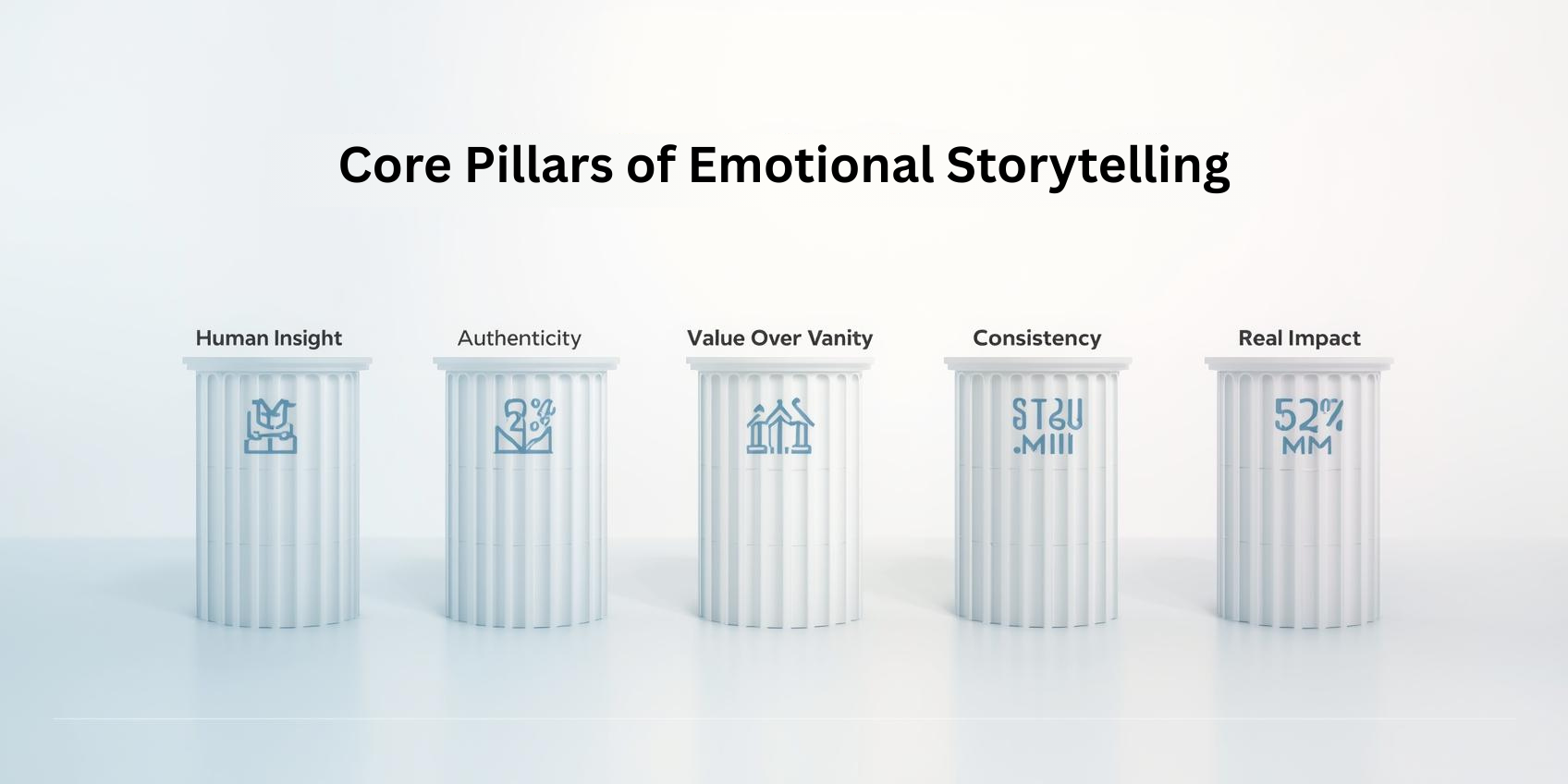
Key Principles for Emotional Storytelling in Public Relations
- Start with real human insight
- Focus on values, not vanity metrics
- Avoid exaggeration or manipulation
- Be consistent across communication
- Let stories evolve naturally over time
Authenticity is the most important ingredient. Audiences can sense forced emotion instantly.
The Risks of Poor Emotional Storytelling in Public Relations
When done incorrectly, emotional storytelling can backfire.
Common mistakes include:
- Over-dramatization
- Inauthentic or performative narratives
- Exploiting sensitive issues
- Inconsistency between words and actions
Effective emotional storytelling in PR must always be grounded in truth and aligned with real brand behaviour.
The Future of Emotional Storytelling in Modern Public Relations
As AI-generated content becomes more common, human emotion will become a key differentiator. In the future:
- Audiences will value authenticity even more
- Brands will be judged on actions, not slogans
- Emotional intelligence will outweigh messaging volume
Emotional storytelling in PR will move from being a creative choice to a strategic necessity.
Why Emotional Storytelling in Public Relations Is a Long-Term Investment
Unlike short-term campaigns, emotional storytelling compounds over time. Each story adds to a brand’s narrative equity.
Benefits include:
- Stronger brand recall
- Deeper audience trust
- Greater resilience during challenges
- Sustainable reputation growth
Modern PR is no longer about one-time headlines; it’s about building belief.
Conclusion
The Power of Emotional Storytelling in Modern Public Relations
In a world overflowing with content, facts alone are no longer enough. Audiences want meaning, honesty, and connection.
This is why emotional storytelling works in modern PR.
By focusing on human experiences, authentic voices, and emotionally resonant narratives, brands can:
- Build trust instead of noise
- Create relevance instead of reach
- Shape perception instead of just presence
Emotional storytelling in PR is not about manipulating feelings; it’s about communicating truth in a way that people can feel, remember, and believe.
For brands that want to matter in today’s world, emotional storytelling is not optional.
It is the future of effective public relations.